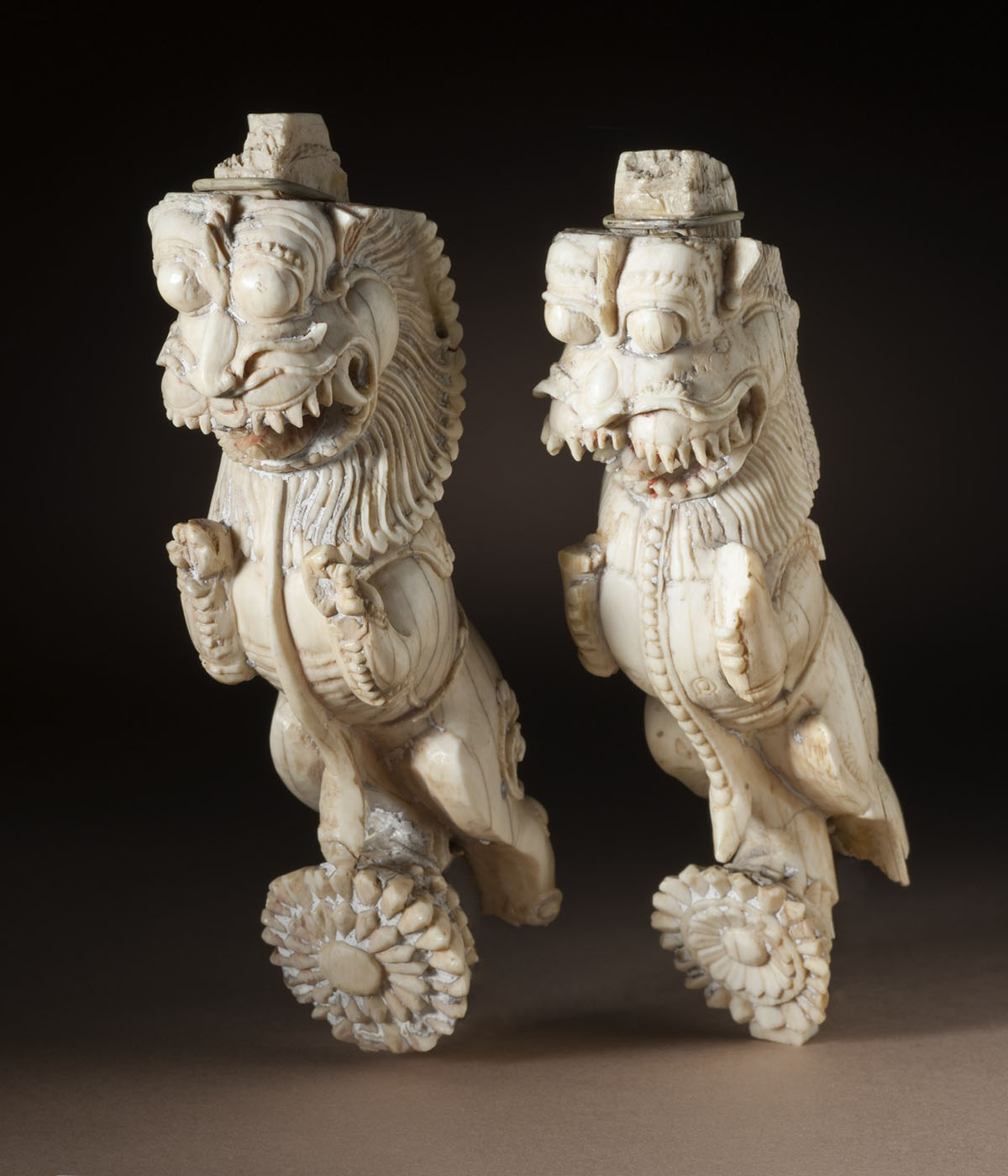
Mythical composite creatures sculpted on pillars and pilasters across temples in South Asia, yalis, also known as vyalas, are most frequently depicted in late medieval and early modern temples in southern India. A yali is usually shown to have the body of a lion and the head of another animal, such as an elephant (when they are called a gaja yali), a human (known as a nara yali) or a dog (termed a svana yali). When the body is that of a tiger, the creature is called a shardula. It may also have horns and hooves. The term “yali” is derived from the Tamil and Sanskrit words for “fierce monster”.
Among the earliest known yali sculptures were produced in the seventh or eighth centuries during the reign of the Pallava Dynasty of present-day northern Tamil Nadu, usually in temples related to Puranic Hinduism. These early depictions of the creatures positioned them squatting at the base of a column. They were also produced in Buddhist contexts through the early medieval period, where they were known as vyalakas and were usually paired with a makara.